
Can I Call Sebujit My Home Too?
I've been trying to write this article for a week now.
Every time I think I've figured out what Gawai Nyobeng is, another memory pops into my head and changes my mind.
At first, I thought I was writing about rituals.
Then I thought I was writing about hospitality.
Then trust.
Then belonging.
Then I started wondering whether Nyobeng is even a festival.
Now I'm not entirely sure.
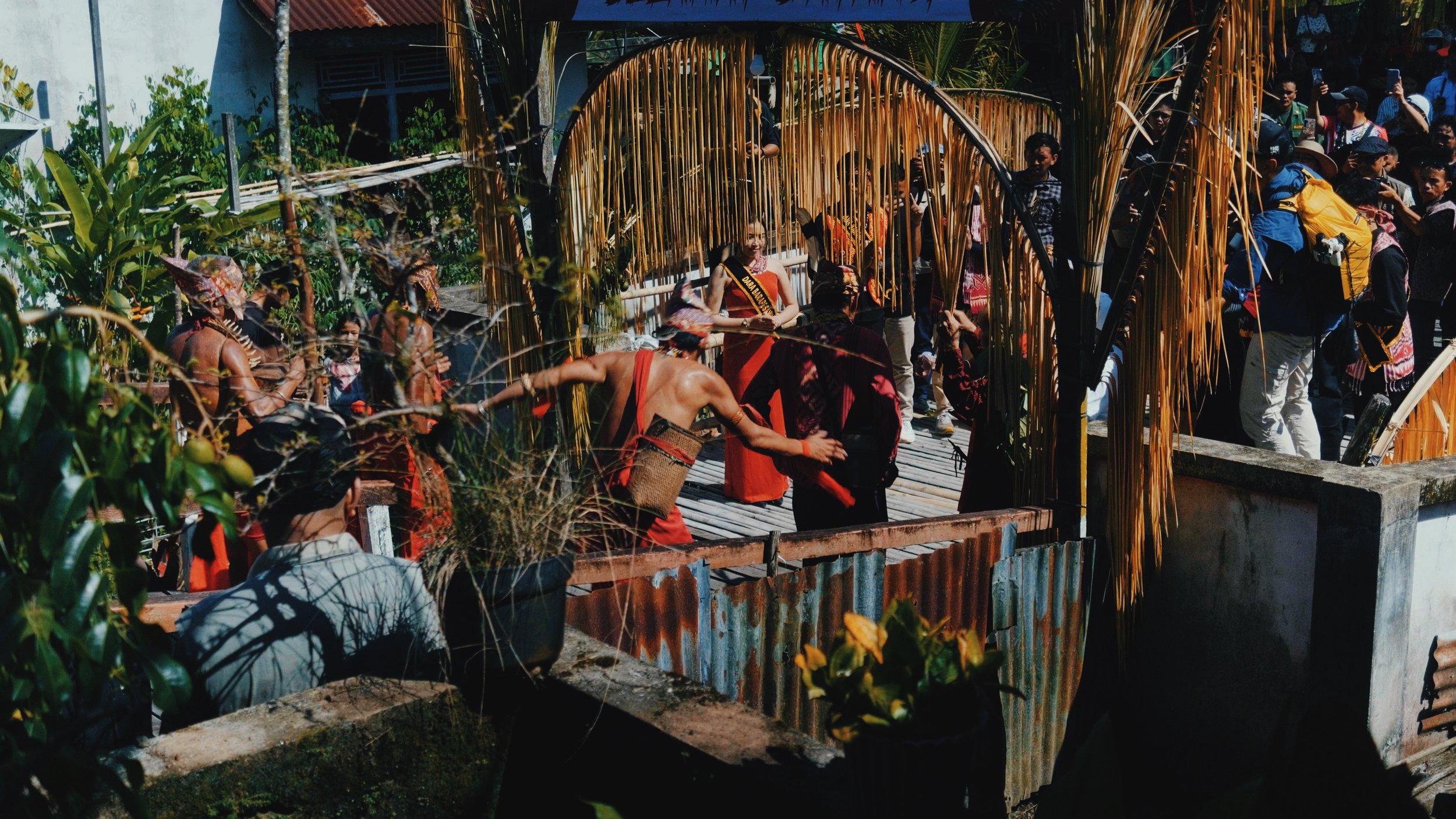
Gawia Nyobeng (Nibakng), celebrated by the Bidayuh in Sebujit, West Kalimantan.
Before arriving in Sebujit, I had heard all sorts of things.
That it was bloody. And that it was ancient.
That there were stories of warriors, headhunters, spirits and magic.
Depending on who you asked, it was either fascinating or frightening.
But those were their stories.
I wanted my own.
I think what I was really looking for was what life felt like back then.
Not the history books version but the lived version.
And in many ways, that's what I got.
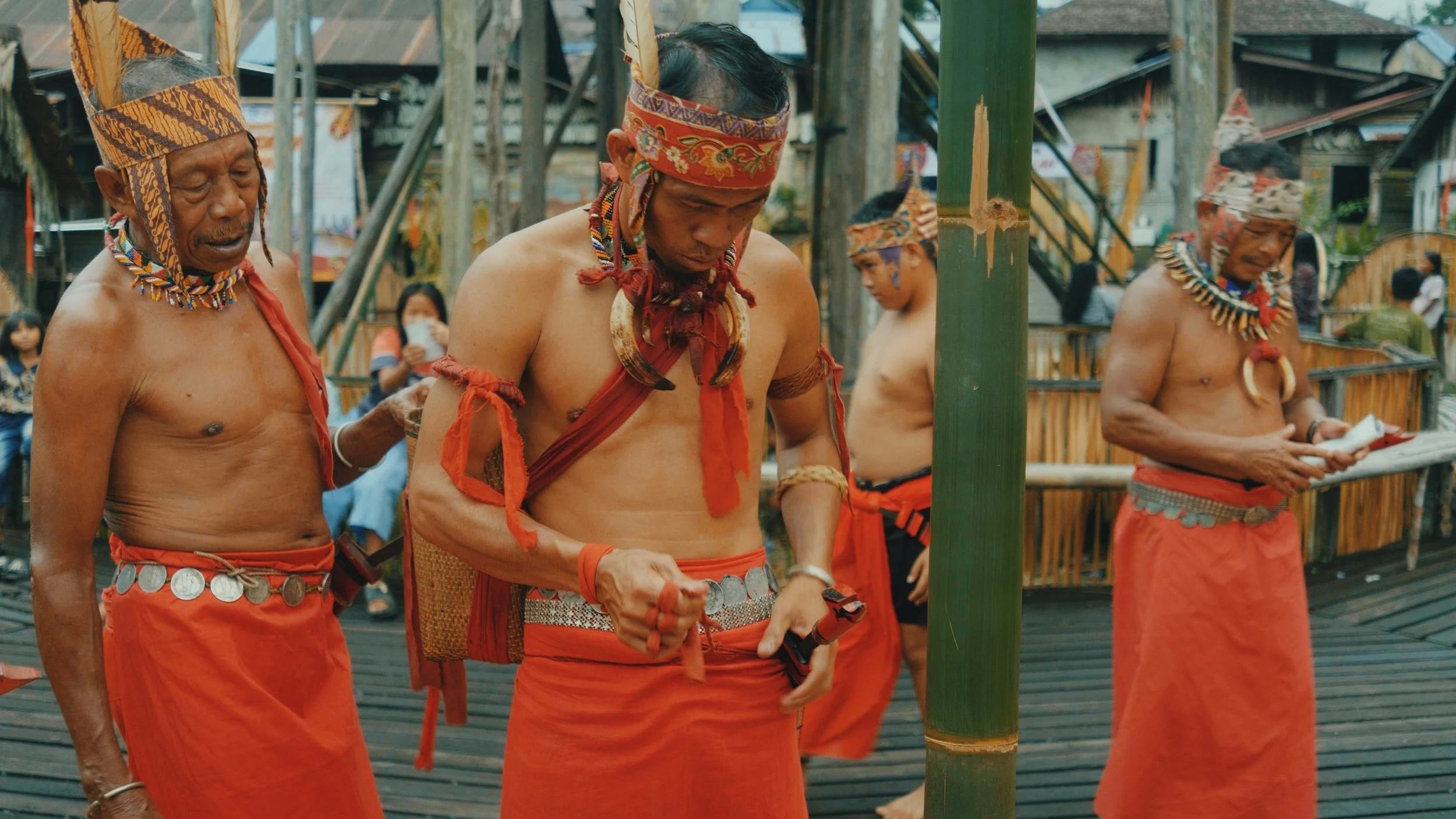
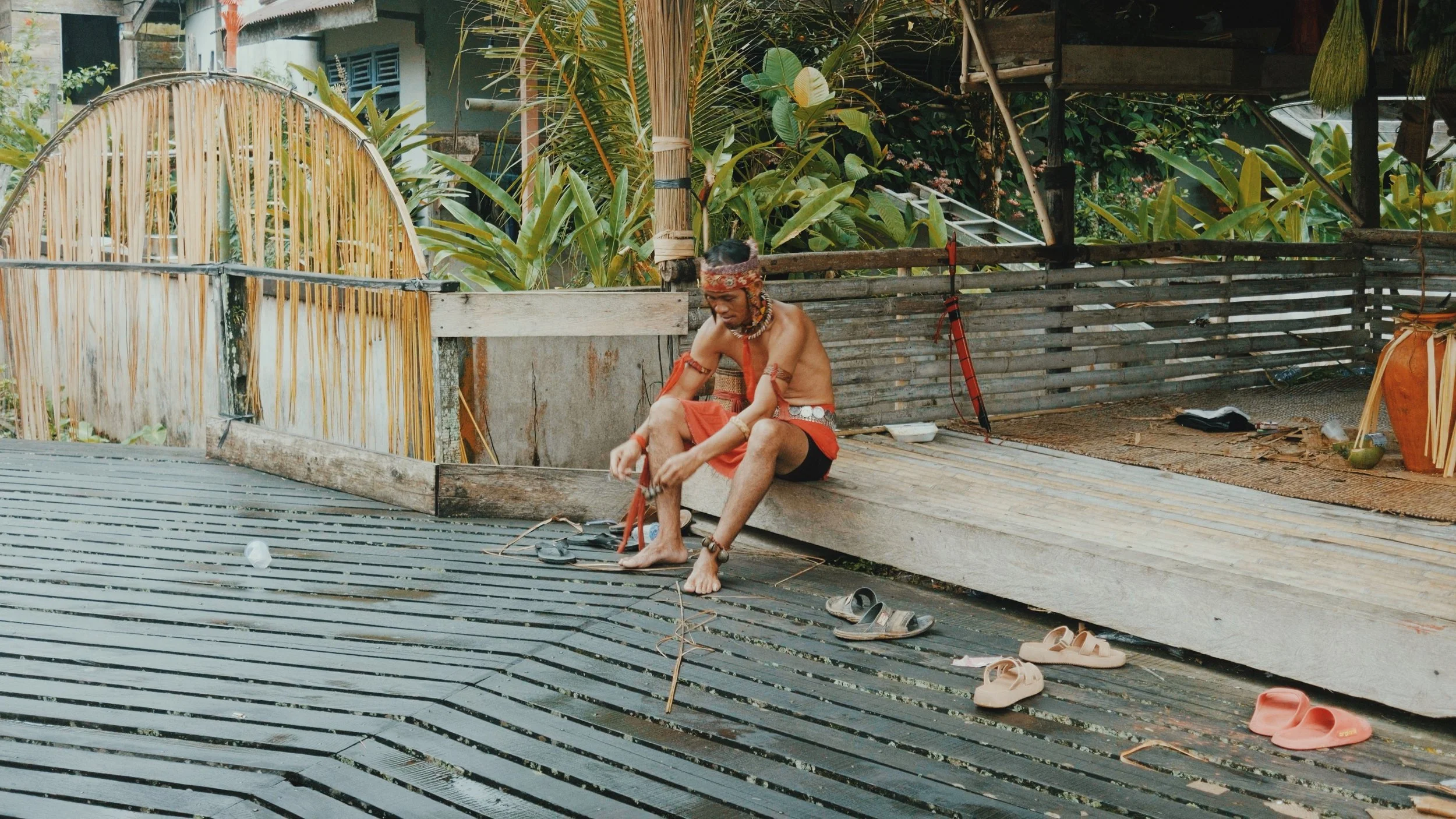
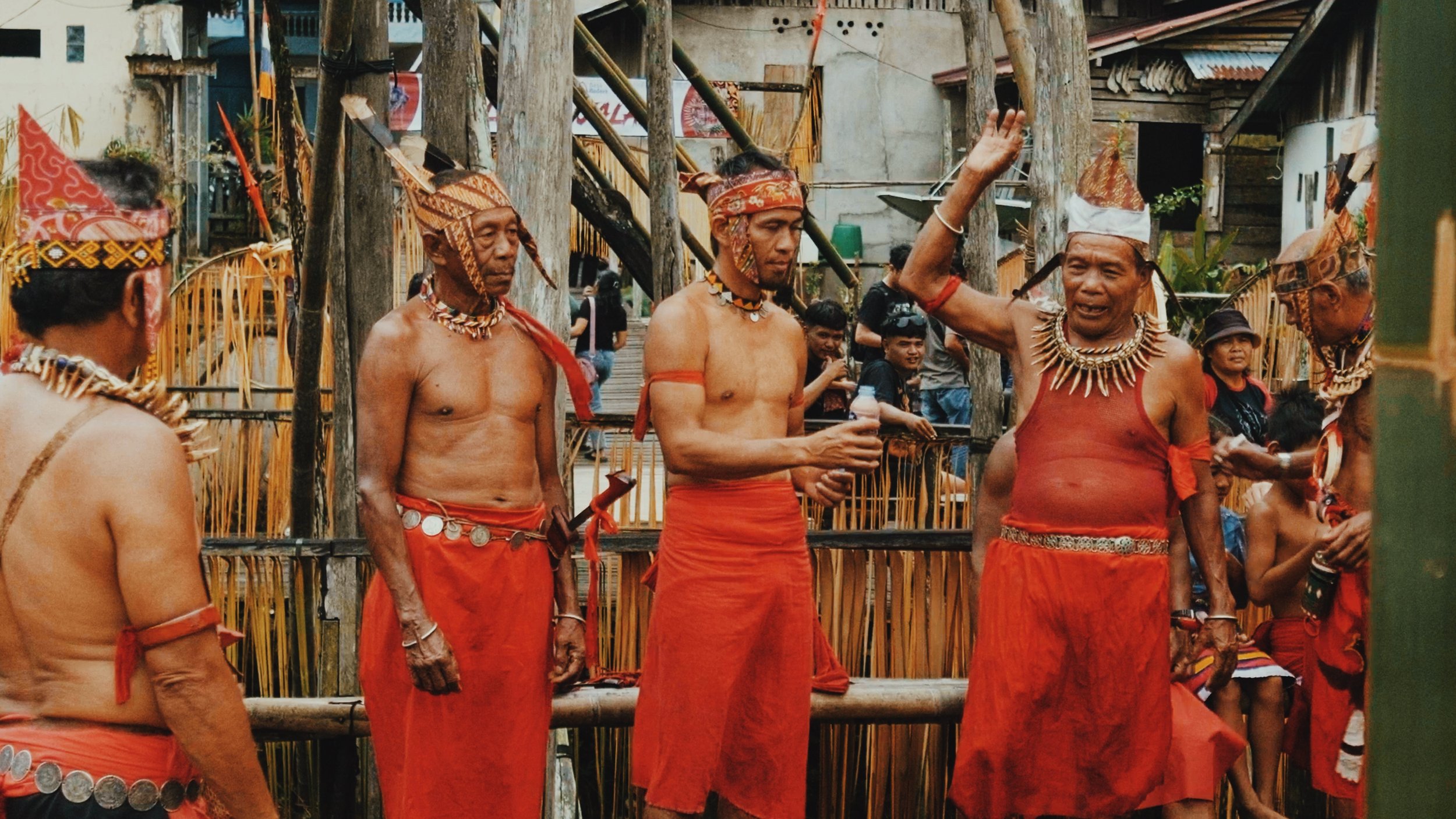
Adat practitioners from a neighbouring kampung.
I woke up to the sound of rhythmic bells.
The kind that makes you sit up and wonder what on earth is happening.
I looked out the window and saw five men dressed in red walking into the village.
My first thought was:
Geez.
If this was a hundred years ago, that's probably the last thing I'd ever see.
Cause they're here for my head.
I laughed about it afterwards, but that thought stayed with me.
Not because Nyobeng celebrates violence.
But because it reminded me that these traditions come from a very different world.
Or at least, that's what I thought.
The more time I spent there, the more I realised the people of Sebujit weren't preserving history.
They were simply living their lives.
I was the one treating it like history.
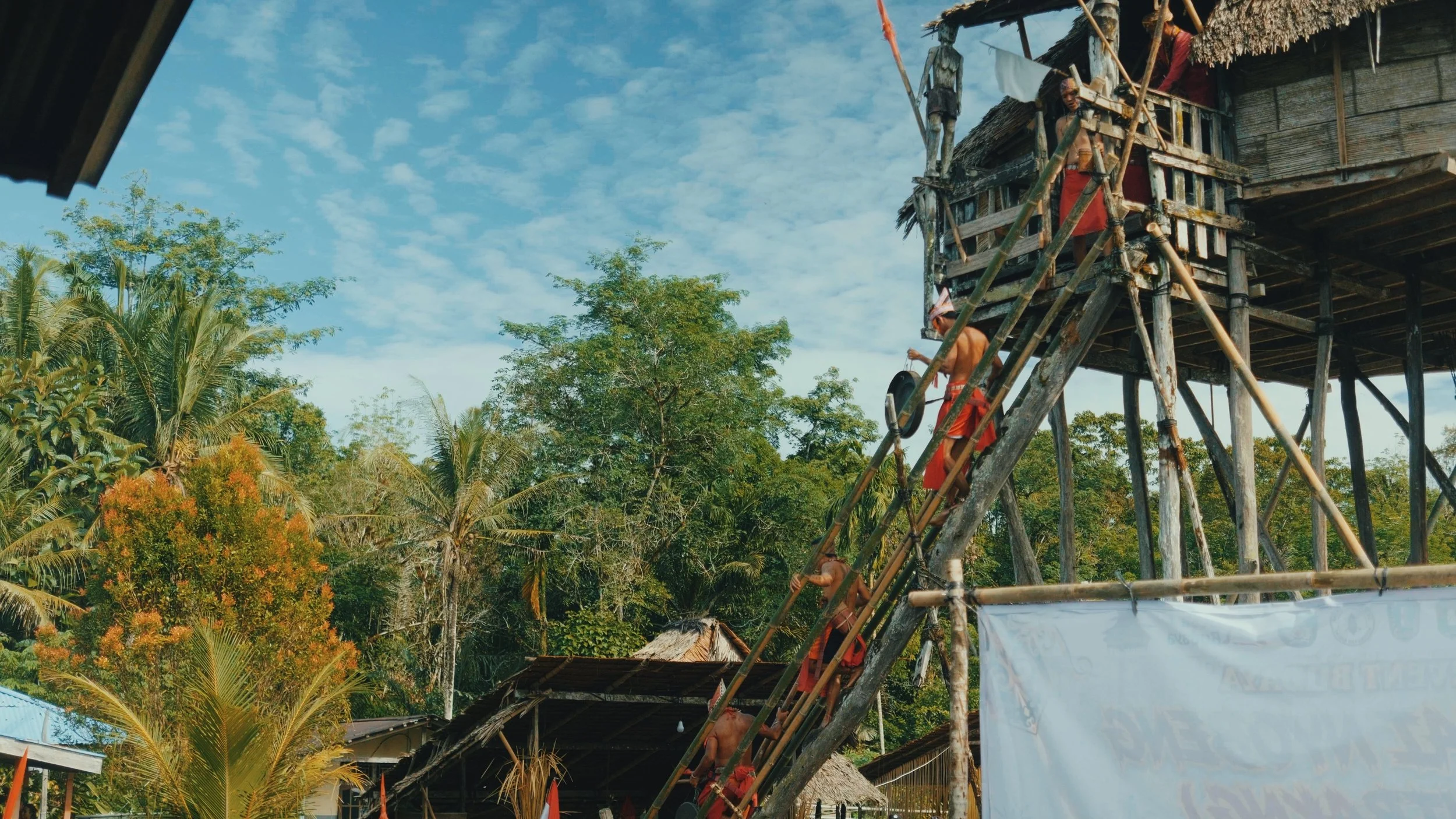
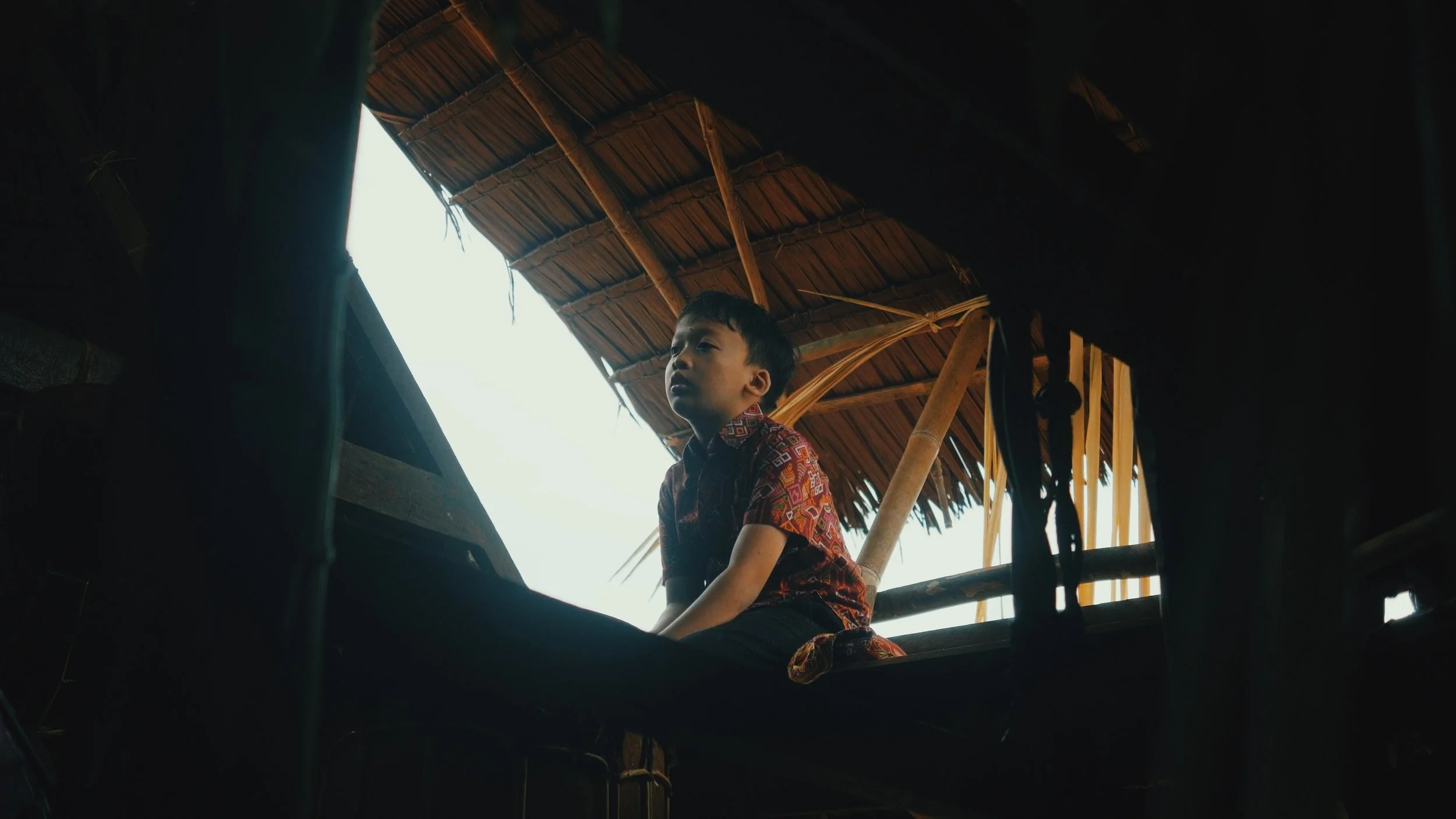
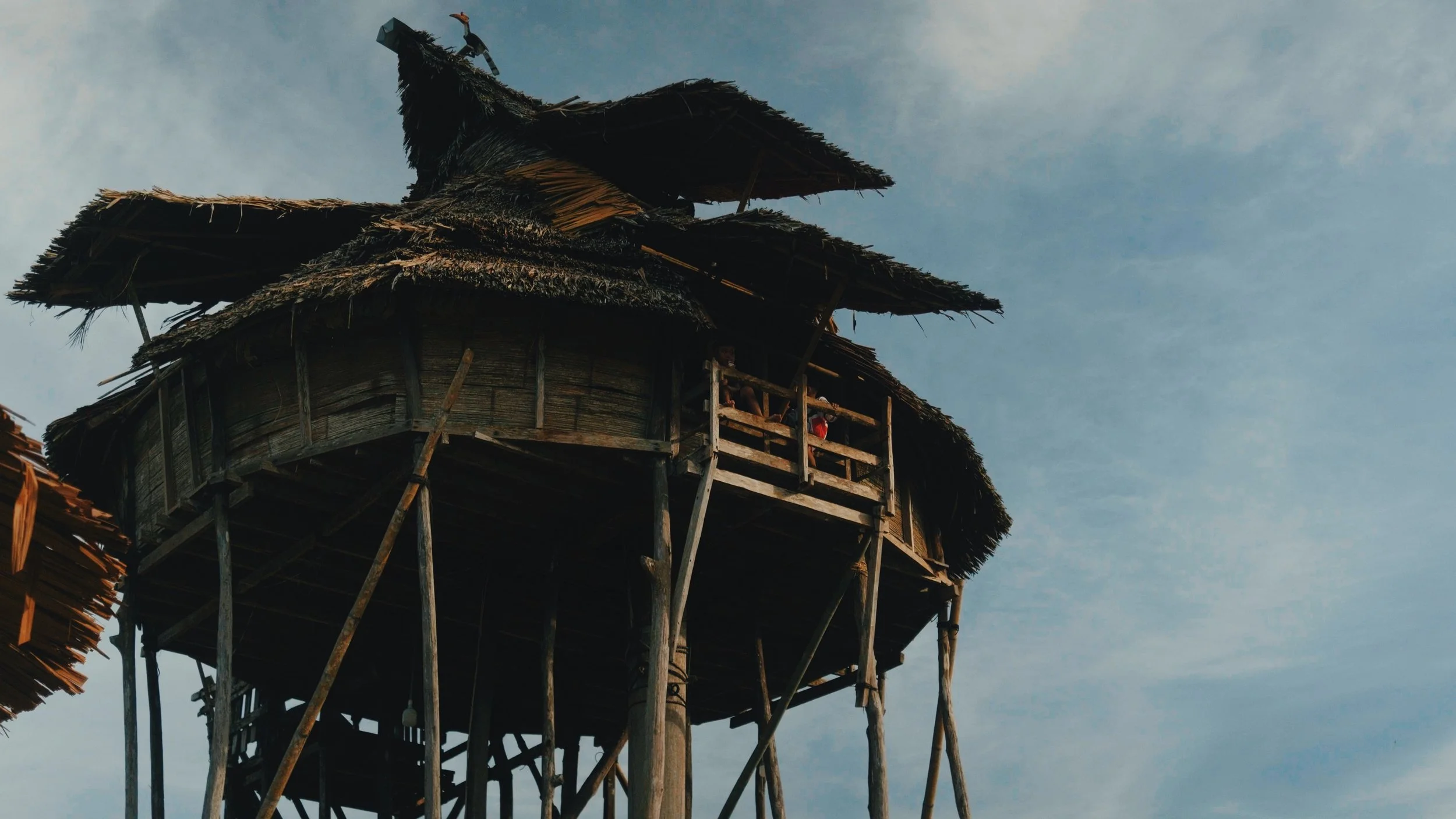
One of the strongest memories I have is of the Baruk.
Everyone notices the Baruk.
You cannot not.
It's huge.
Raised high above the village on massive Belian pillars.
The kind of building that makes you stop and stare.
But what stayed with me wasn't the building.
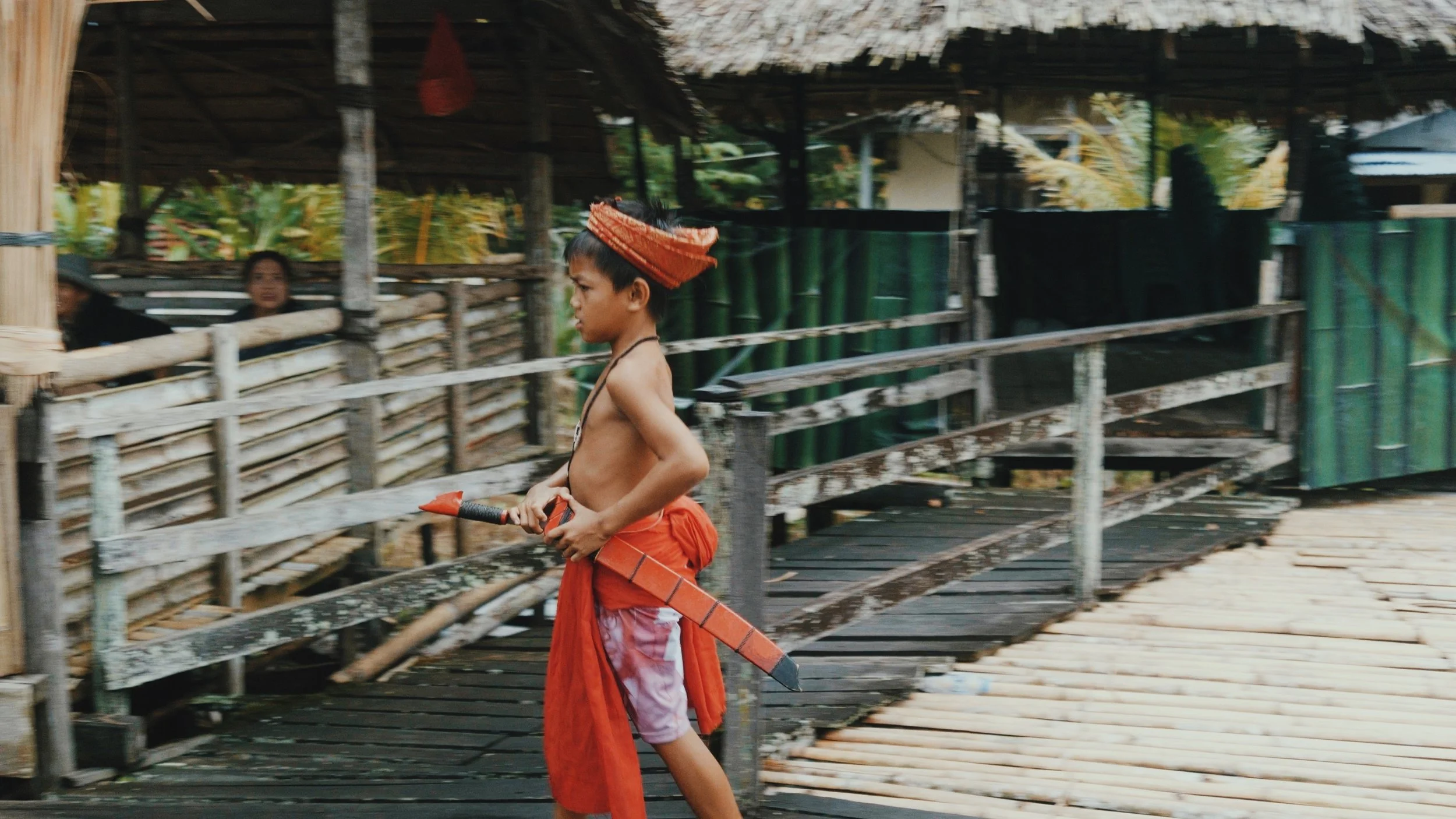
It was a kid.
He was running up and down the log stairs like it was nothing.
No fear.
No hesitation.
Meanwhile, I was looking at the same staircase thinking one wrong step and that's the end of me.
The Ketua Adat climbed it too.
As frail as he looked, he just walked up.
No fuss.
No ceremony.
Like he'd done it his whole life.
Which I suppose he has.
And that's when I started wondering if I had gotten the whole thing wrong.
Maybe I wasn't looking at the past.
Maybe I was looking at a community continuing something that still mattered.
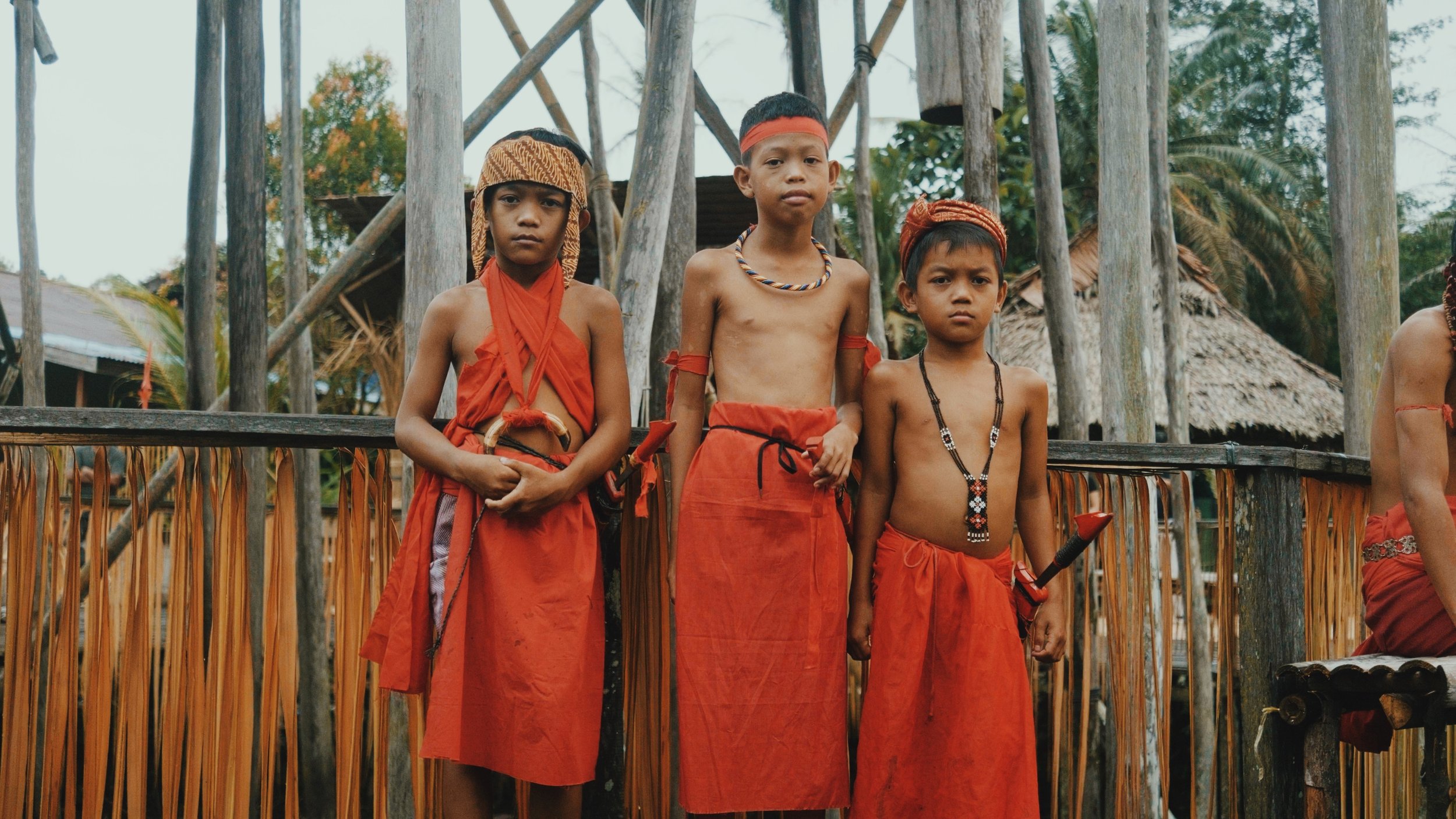
Children of Adat.
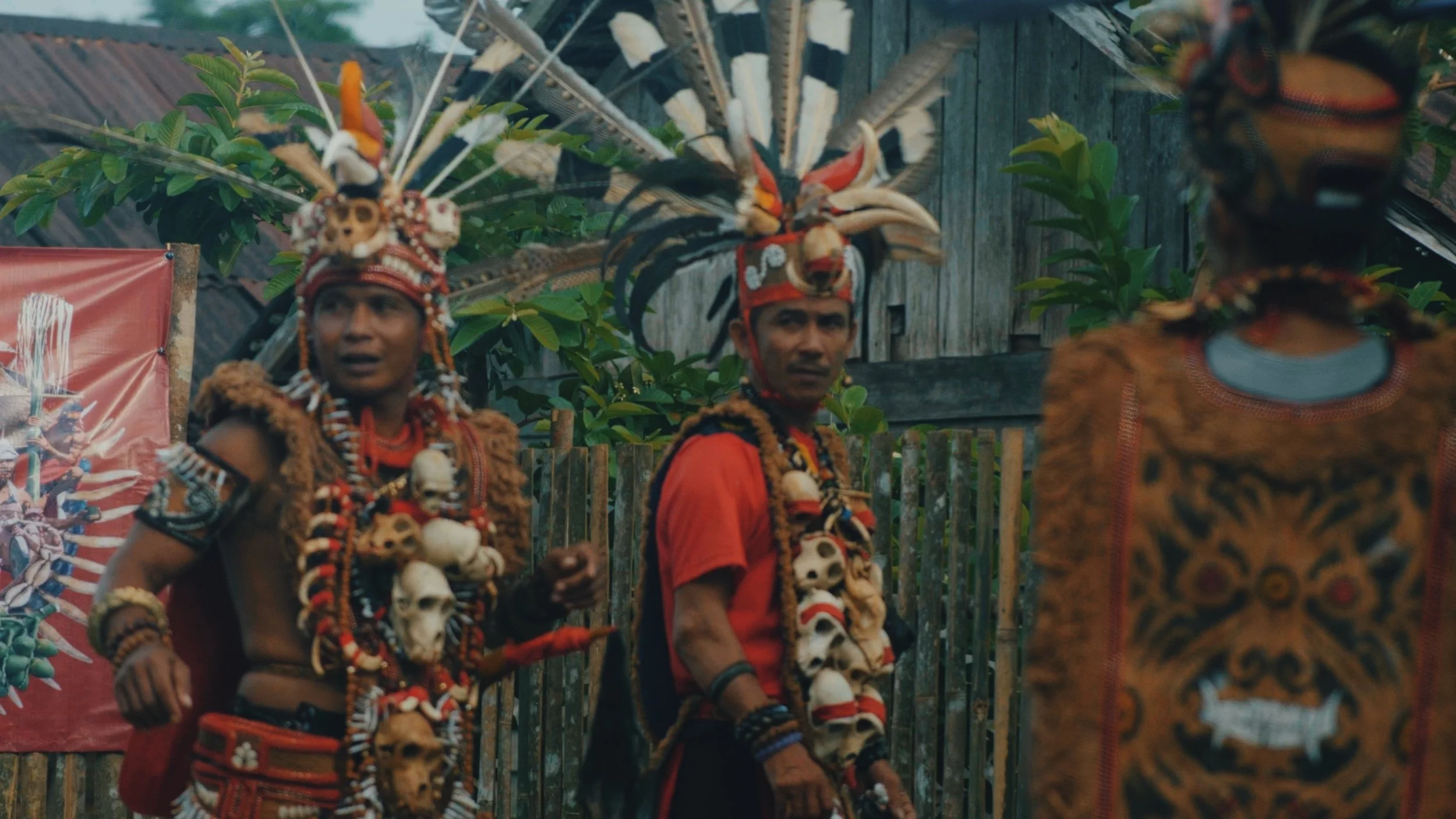
People always ask about the skulls.
I did too.
Turns out the only human skulls are kept inside the Baruk and visitors don't get to see them.
The skulls most people encounter are animal skulls from communal hunts.
But even then, the skulls weren't the interesting part.
The stories were.
One person explained that after a hunt, everything gets divided equally.
Bahagi sama rata.
The meat.
The harvest.
The rewards.
Everything.
At first I thought that was just about practicality.
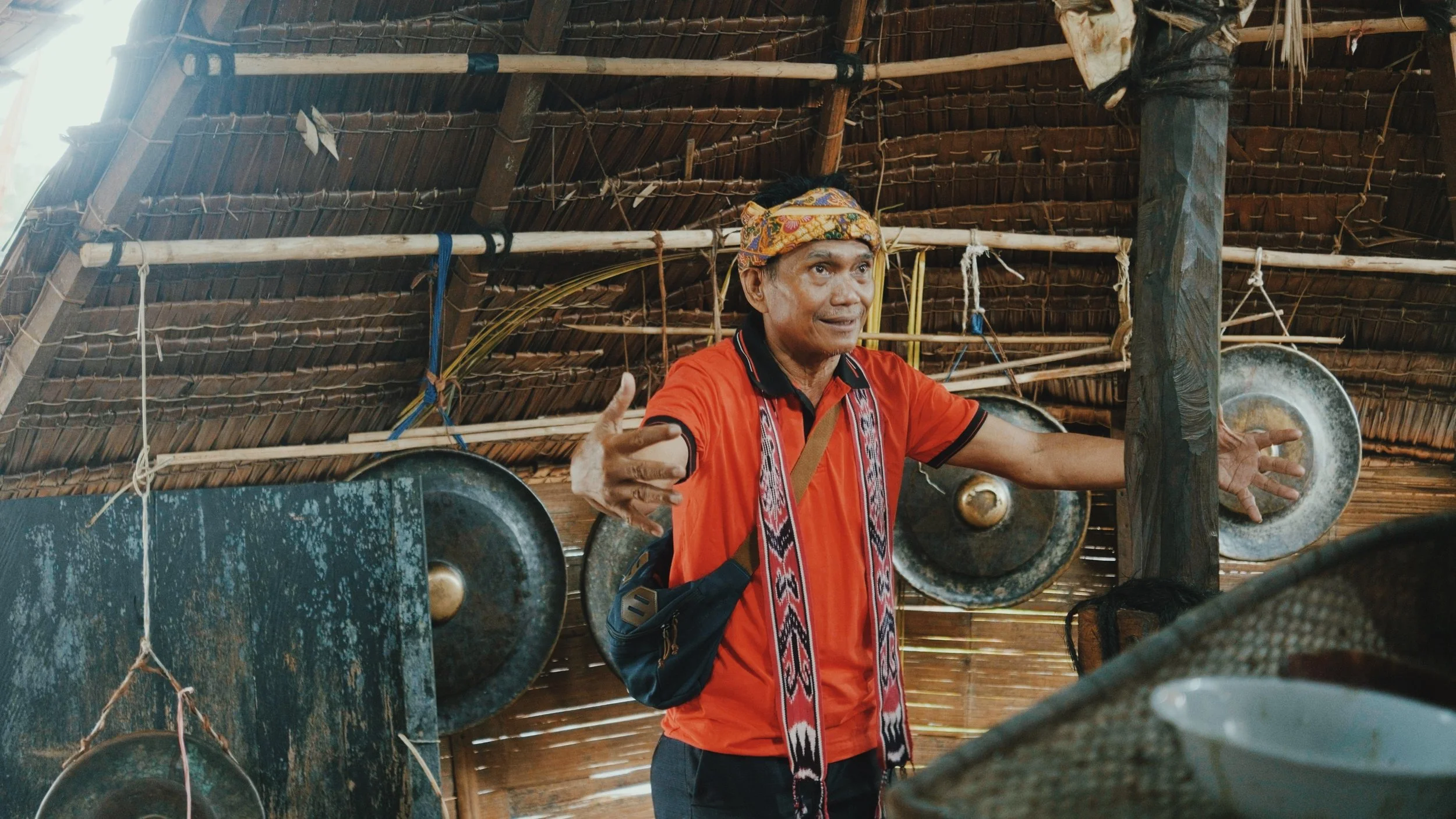
Pak Gunawan, Head of Sebujit, explaining about the concept of “Bahagi Sama Rata”.
While sitting in someone's home overlooking the festivities, I asked whether there were any supernatural stories connected to Nyobeng.
The answer came quickly.
I was told that the Ketua Adat could become a vessel for the spirits of past warriors.
When that happened, people believed he could leap from the Baruk without injury.
Mind you, the Baruk isn't exactly short.
Now, I don't know what to do with a story like that.
Part of me wants to analyse it.
Part of me wants to question it.
Part of me wants to know whether it really happened.
But the longer I sat there, the less interested I became in proving or disproving it.
Because whether I believed it wasn't really the point.
The story exists.
People carry it.
People share it.
People find meaning in it.
And perhaps more importantly, someone trusted me enough to tell it.
Later, I learned that stories like these aren't shared lightly.
People want to know who you are.
Why you're there.
What your intentions are.
Trust needs to be built.
And once that story leaves the village, it leaves their control too.
I can misunderstand it.
I can exaggerate it.
I can dismiss it.
Yet they shared it anyway.
That trust felt heavier than the story itself.
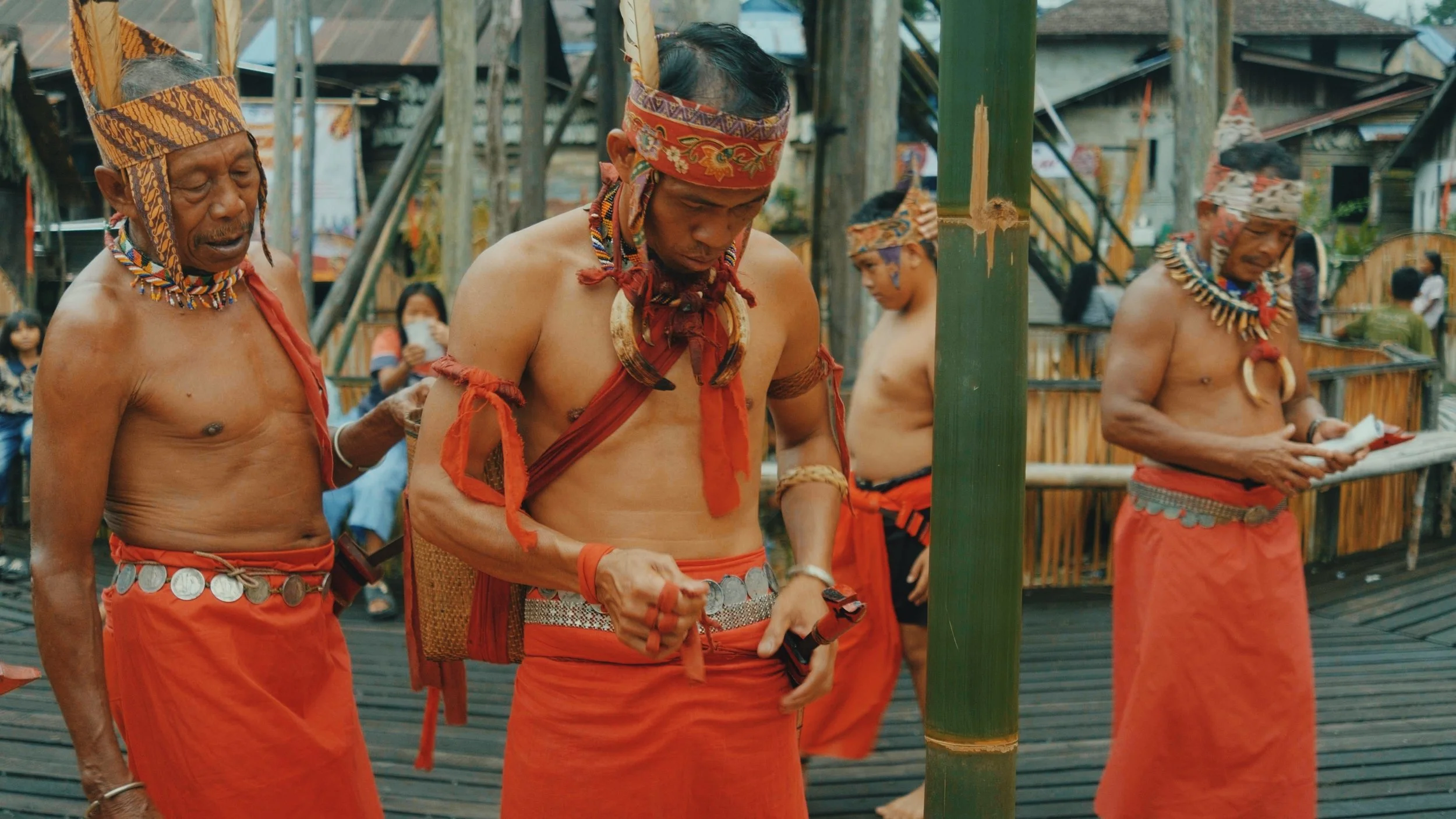
Daari Bidayuh.
The funny thing is, most of my favourite memories happened away from the rituals.
While everyone was watching the main events, I kept wandering off.
Into homes. Down side paths. Towards smaller groups sitting together.
I wanted to know what people were talking about.
What beer they were drinking.
Which ice cream tasted the best.
Which balloon the kids wanted.
The local gossip.
The everyday stuff.
The things that rarely make it into documentaries.
I think I spent most of the trip looking sideways.
And that's probably the best way to describe the entire trip.
Everyone else was looking up.
I kept looking sideways.
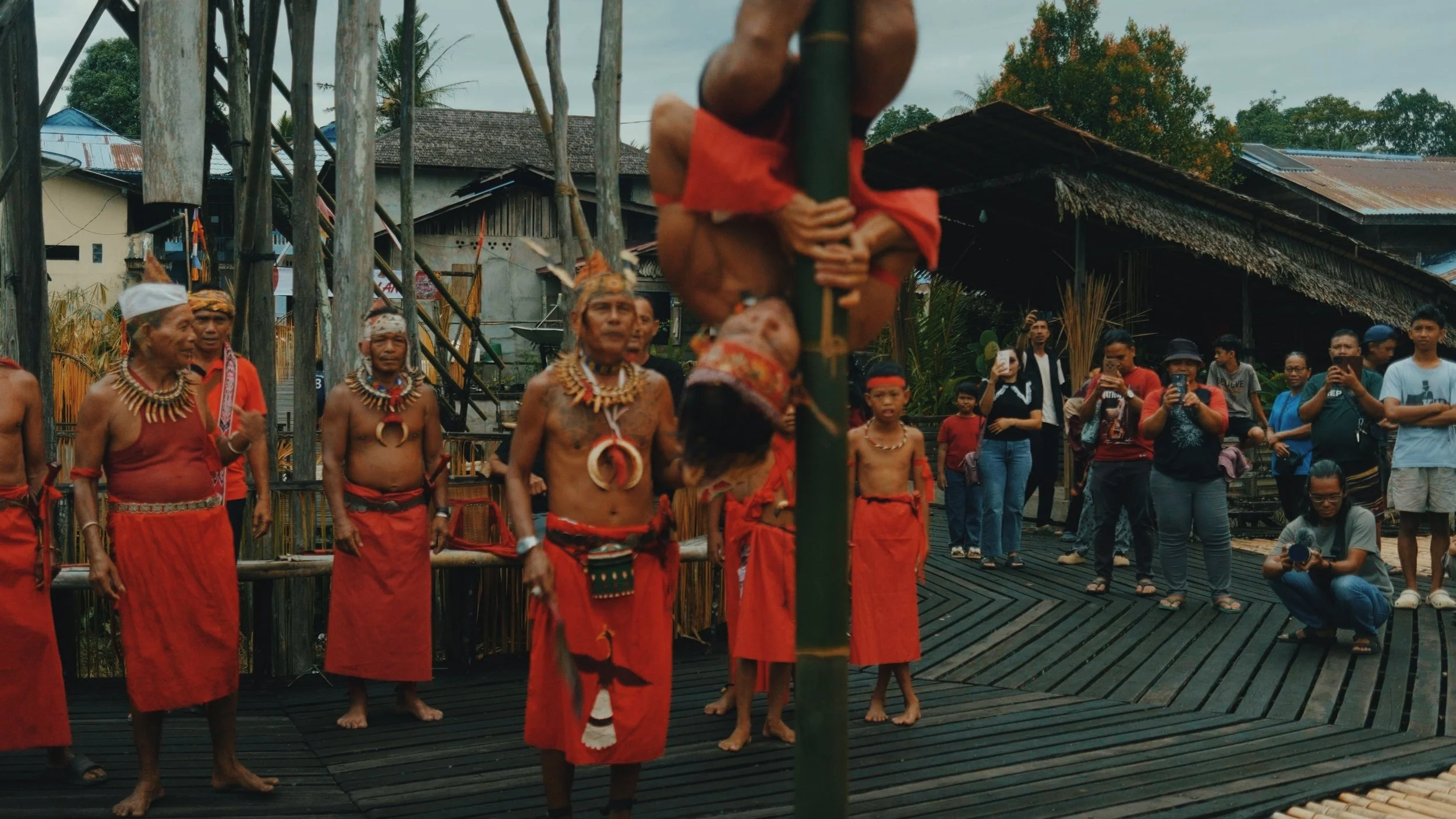
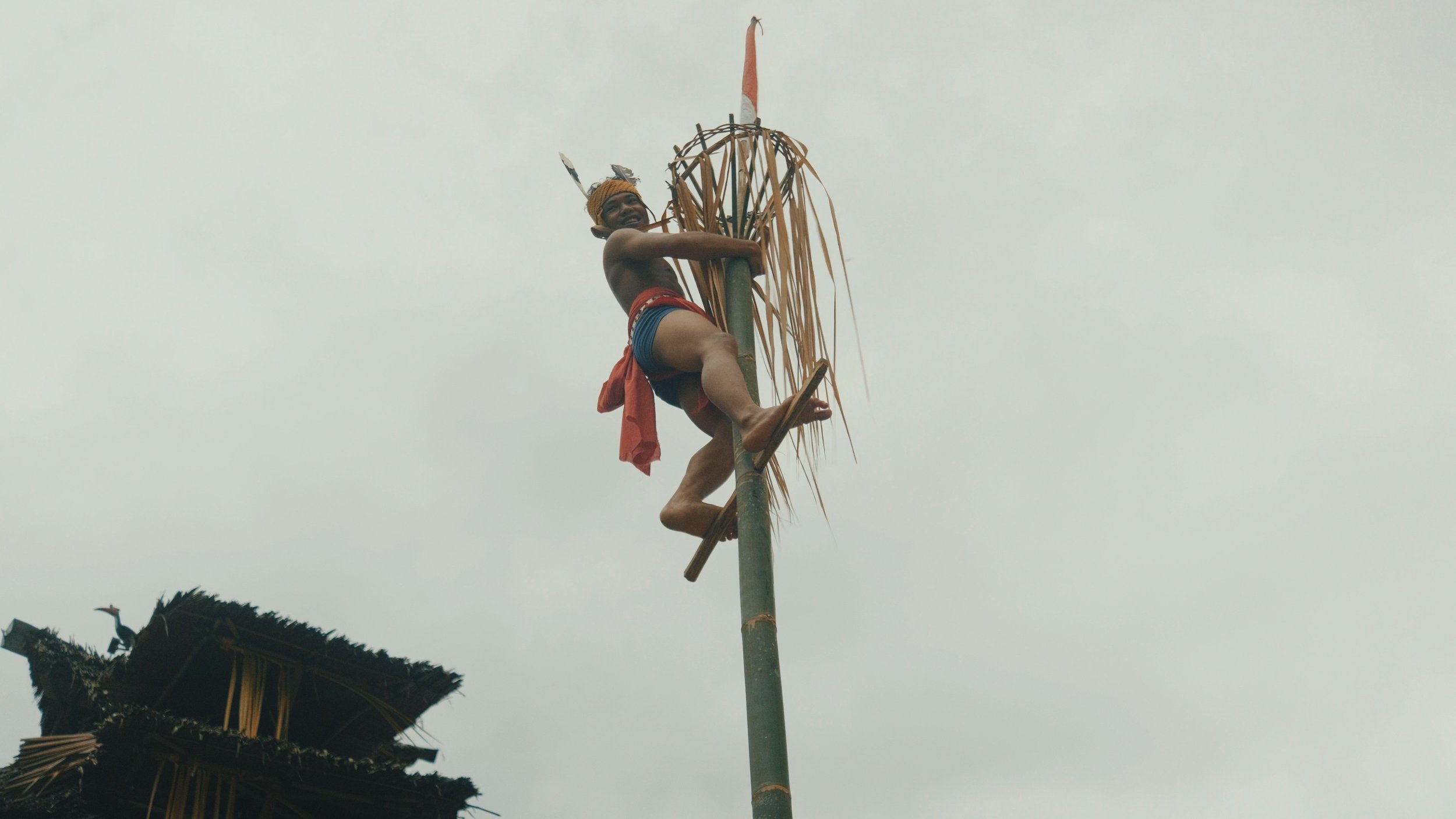
Test of strength for the coming of age boys.
A young man was hanging upside down from a bamboo pole.
Everyone was watching.
Everyone was taking photos.
I wanted to take some too.
Then I looked around and suddenly felt uncomfortable.
It felt a little too much like:
"Here's something exotic, come take your pictures."
So I stepped back. Then I stepped back again.
A kid came and sat beside me.
He asked about my camera.
Then he told me he wanted to become a filmmaker one day.
A few minutes later, I found myself handing him a camera that cost more than I care to admit and showing him how it worked.
He was careful.
Curious.
Excited.
Smiling the entire time.
To be honest, I barely remember the climber now.
I remember the kid.
That happened a lot in Sebujit.
Every time I looked away from the spectacle, someone handed me a story.
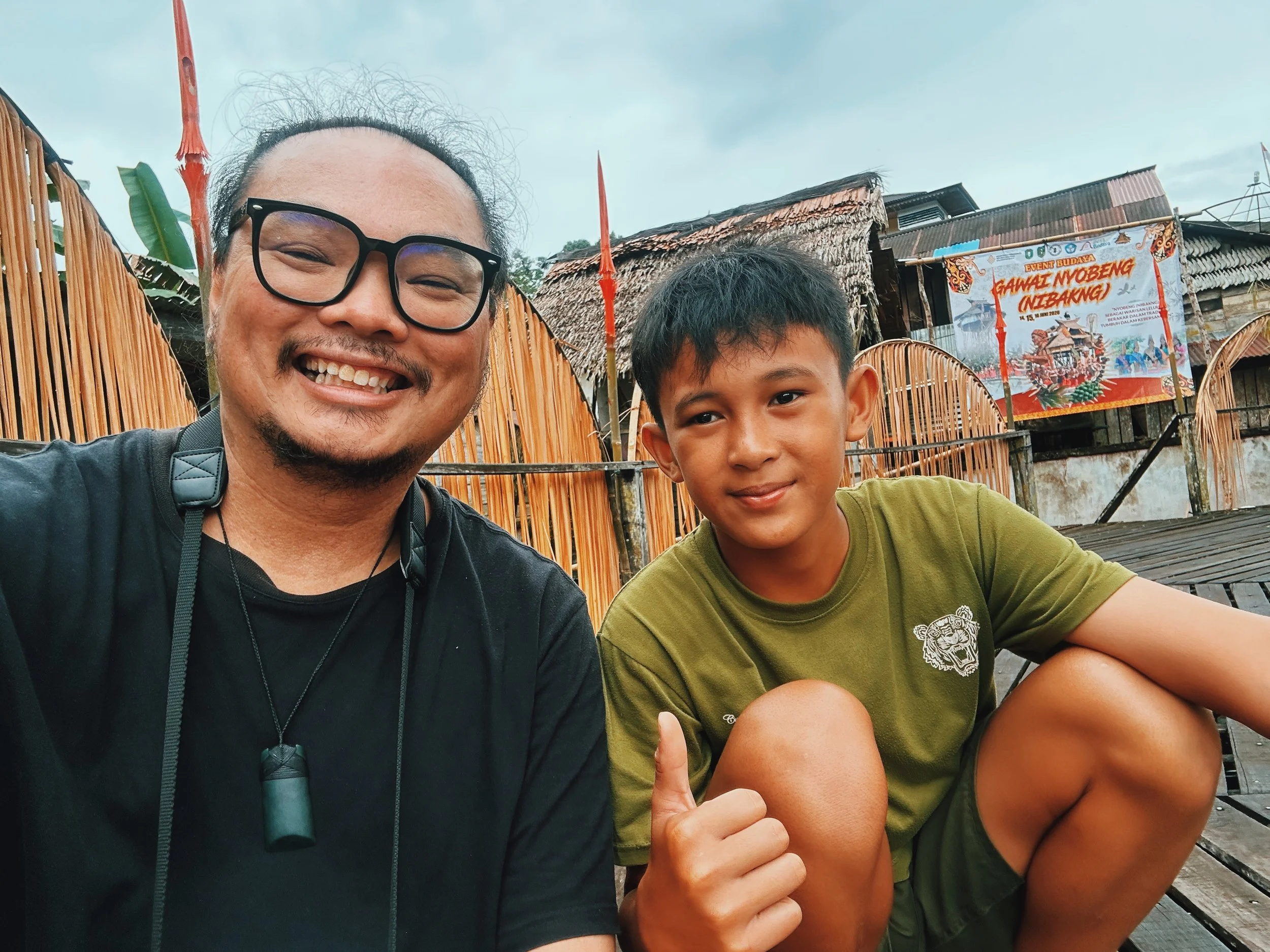
Before arriving, I worried about standing out.
I was probably the tallest person there.
Long hair tied up. Talking funny. Looking different.
For a while, I assumed people were staring.
Looking back, I think that assumption belonged entirely to me.
Because what I encountered instead were smiles.
Greetings.
Invitations.
Conversations.
People welcoming me into their homes.
People introducing me to their families.
People offering food before I could even ask.
I never felt judged.
Only welcomed.
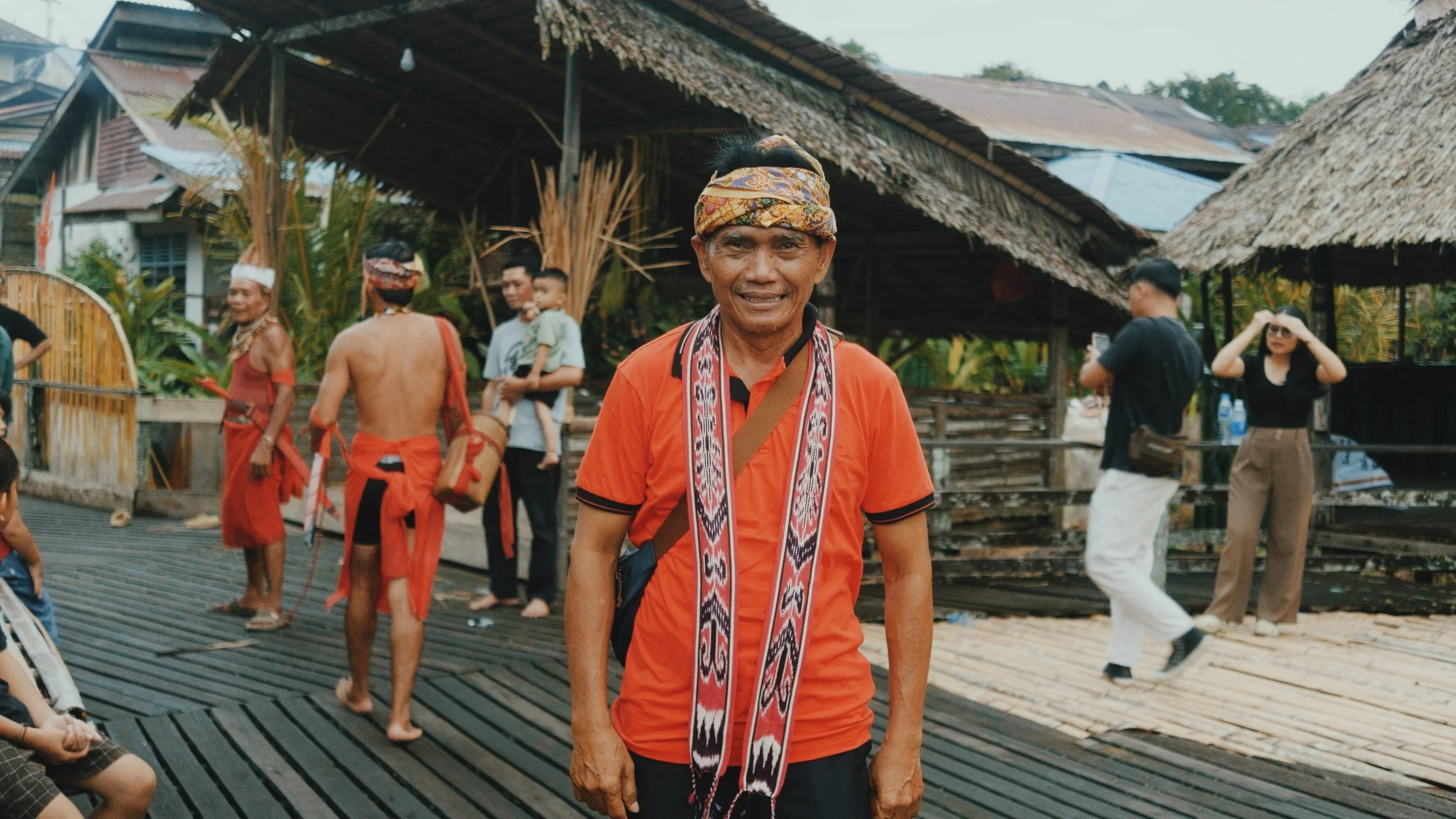
Pak Gunawan, Gawia Nyobeng (Nibakng) 2026, Sebujit, West Kalimantan.
A few days after coming home, someone told me something that caught me off guard.
Apparently Pak Gunawan had asked about me three times.
Three times.
At first I didn't understand why.
Then I realised I had spent the last day trying to get home.
I missed my son.
I wasn't fully present anymore.
I was counting down the hours.
When someone explained that to him, his response was simple.
"Tell him it's okay. They're okay. Stay a little longer."
Later that day, he served me the first communal tuak.
At the time I thought it was a nice gesture.
Now I think it meant something else.
The more I reflect on it, the more I think about that phrase.
Bahagi sama rata.
Divide equally.
Share equally.
At first I thought it was about food.
Now I wonder if it's also about care.
Because the same care shown to family seemed to be extended to a stranger.
Someone who looked different.
Sounded different.
Came from somewhere else.
Yet somehow had already been accepted.
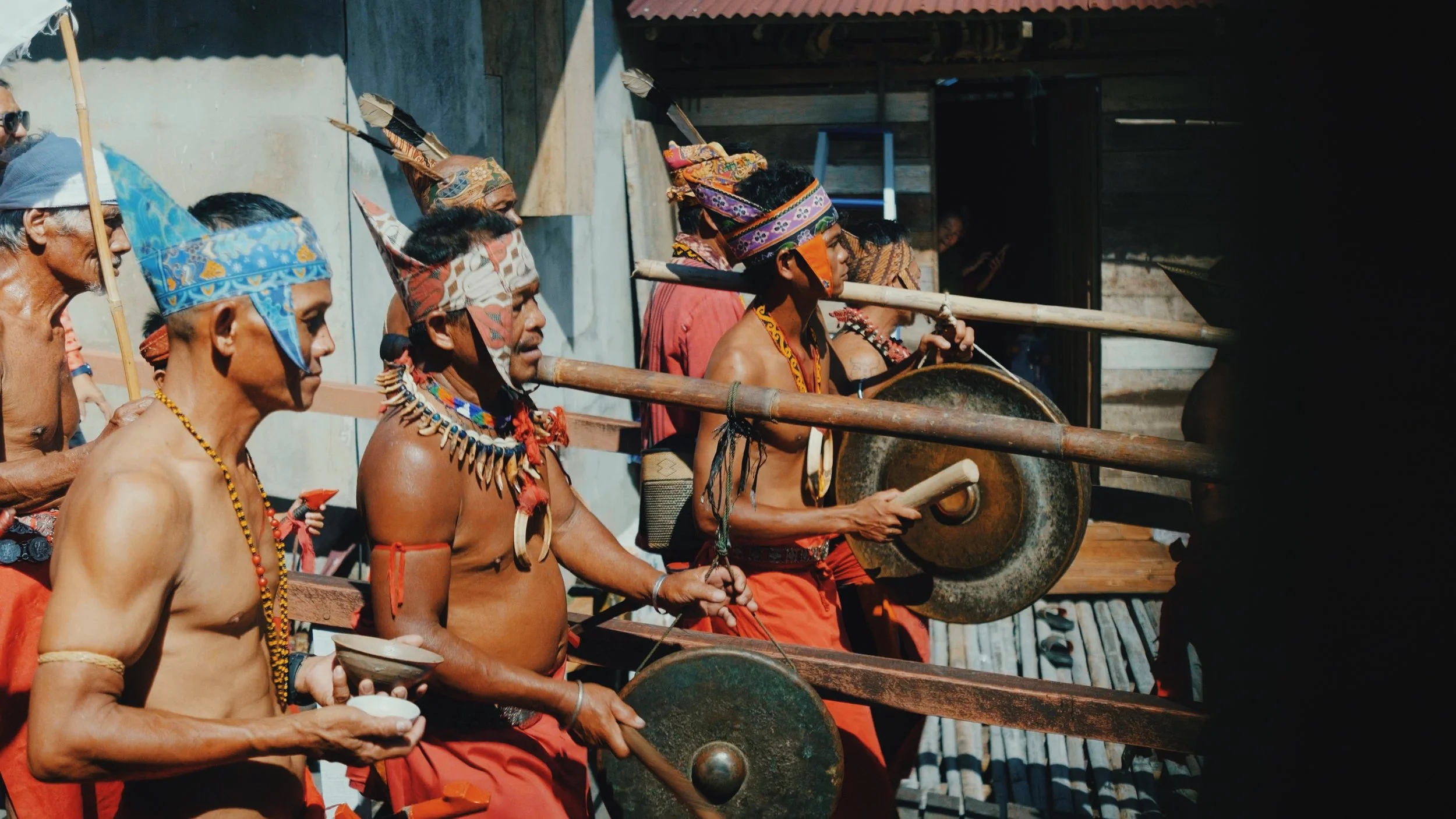
Adat practitioners playing the gong.
Someone asked me recently whether Nyobeng should attract more tourists.
I honestly don't know.
Tourism can feel extractive.
People arrive.
See.
Take photos.
Leave.
That wasn't my experience.
The closest thing I can compare it to is Hari Raya.
People travelling from near and far to come home.
To see family.
To reconnect.
To eat together.
To catch up.
Yes, there are rituals.
Yes, there are ceremonies.
But the more I think about it, the more I feel that people come back because this is where they belong.
The rituals give it another layer of meaning.
The people are the reason.
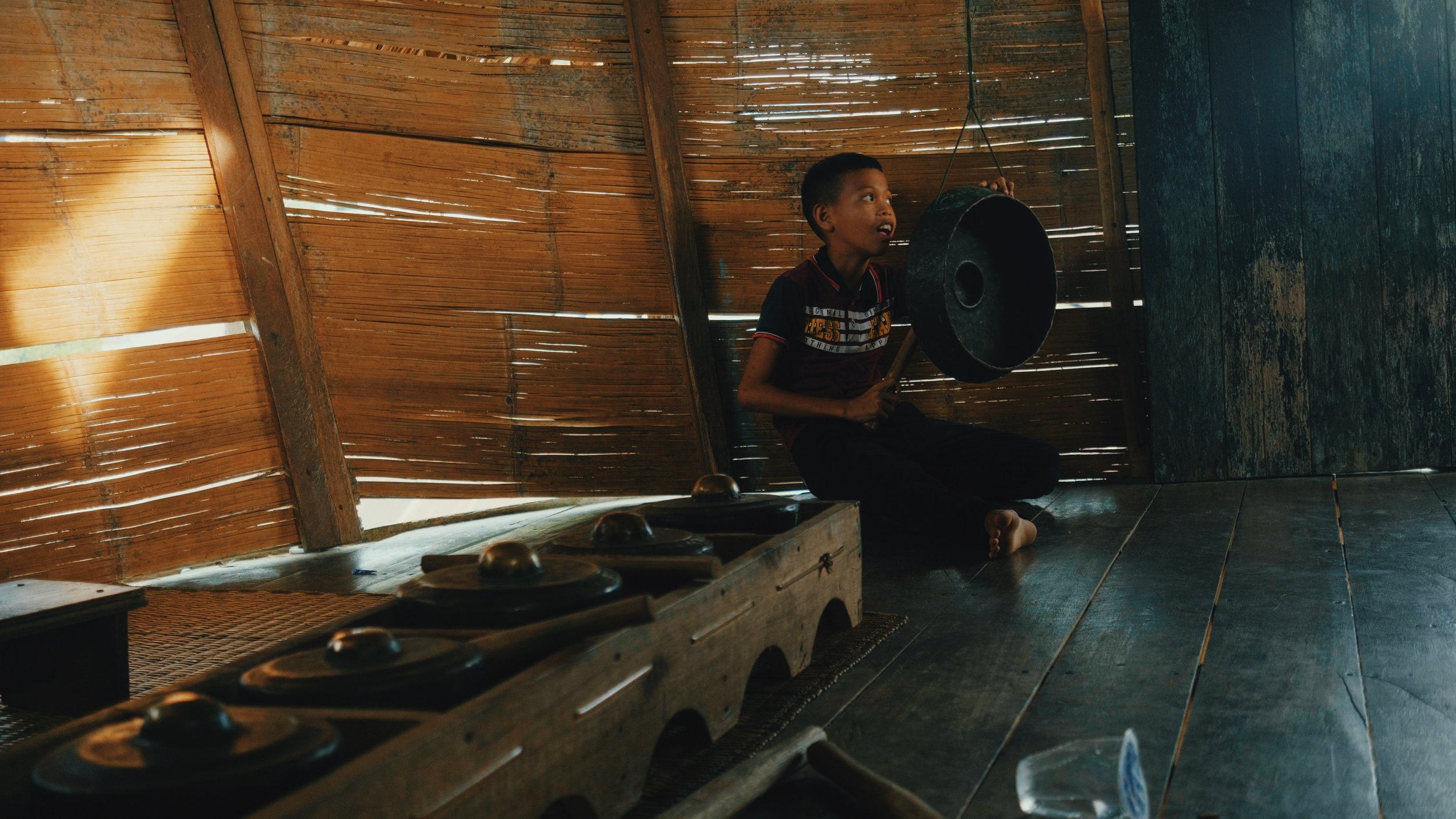
Ahgong in the Baruk.
So, can I call Sebujit home too?
Honestly?
I don't know.
Maybe that's too strong a word.
Maybe I haven't earned it.
Three days is nowhere near enough time to understand a community.
It's barely enough time to understand a place.
But here's what I do know.
At the end of the trip, nobody asked me whether I enjoyed the rituals.
Nobody asked whether I got the photos I wanted.
Nobody asked what I thought about the skulls.
They asked whether I'd come back next year.
My wife too.
My son as well.
And somehow, that's the thing I keep thinking about.
Not the rituals.
Not the stories.
Not the spectacle.
The invitation.
Because when I arrived, I was a visitor.
Somewhere along the way, I became a guest.
And if I ever do make it back to Sebujit, I suspect it won't be because of Nyobeng.
It'll be because there are people there I'd like to see again.
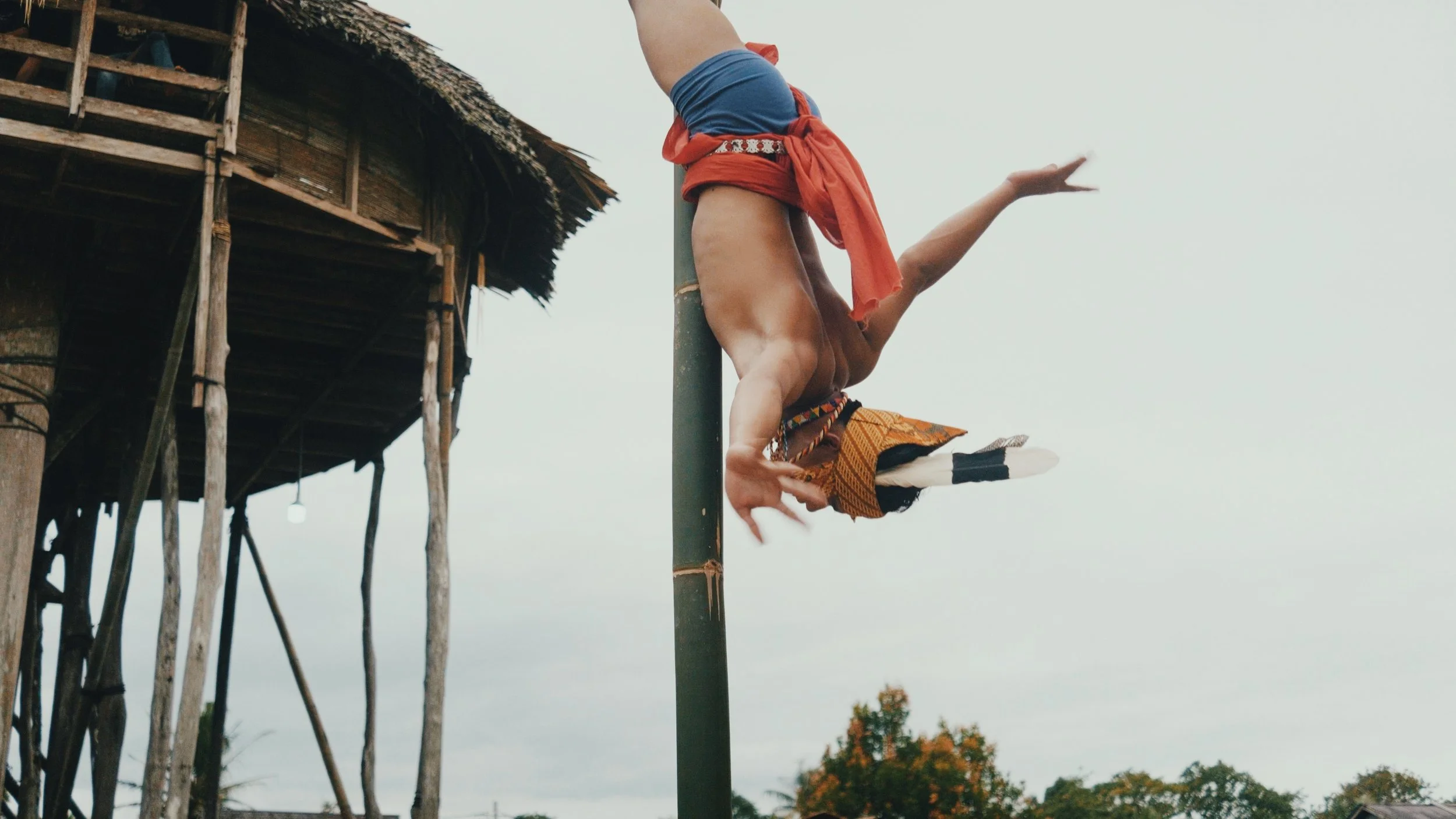
Aura-farming.
